.png)


.jpeg)


About this Tree
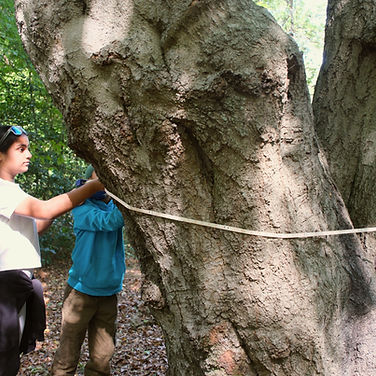
The Epping Forest Beech stands within one of England’s most storied woodlands, a living remnant of a forest landscape that once stretched continuously from the edge of medieval London deep into Essex. Epping Forest has been protected in law since 1878 “for the recreation and enjoyment of the people,” making it one of the earliest large-scale acts of urban environmental preservation in the world. For centuries before that, it functioned as a royal hunting forest, a working commons, and a threshold space between city and countryside. To walk among its trees today is to move through layers of time — where pollarded trunks, sunken paths, and open glades record generations of human presence without ever exhausting the forest’s own agency.
Beech trees (Fagus sylvatica) are among the quiet architects of this landscape. Smooth-barked and slow-growing, they are long-lived witnesses rather than rapid colonisers. In Epping Forest, many beeches bear the characteristic forms of historic pollarding — thickened trunks and branching crowns shaped by centuries of careful cutting, which extended their lifespan while allowing light to reach the forest floor. Beech woodland creates a distinctive acoustic and atmospheric environment: dense canopies soften wind, fallen leaves form deep insulating carpets, and the tree’s solid wood transmits vibration with remarkable clarity. These qualities make beech trees not only visual anchors, but acoustic ones — organisms that shape how sound moves, lingers, and is absorbed in the forest.
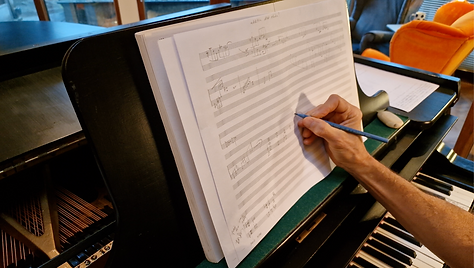
Within the Treeline project, this beech becomes more than a subject of observation; it becomes a participant. Treeline treats trees as living interfaces — entities with rhythms, responses, and environmental memory that can be listened to through sound, sensing, and long-term attention. Field recordings taken from the beech — through contact microphones, ambient listening, and repeated seasonal visits — are not attempts to extract or translate the tree, but to enter into relationship with it. The sounds captured are shaped jointly by the tree’s physiology, the surrounding forest, weather conditions, and the subtle interactions of insects, birds, and human footsteps passing nearby.
In this context, the Epping Forest Beech stands as a mediator between ancient woodland and contemporary urban life. Rooted in a forest legally preserved for public good, yet surrounded by the pressures of one of Europe’s largest cities, it embodies continuity under constraint. As part of Treeline, it enters a new phase of attention — not as a symbol imposed from outside, but as a collaborator in an ongoing practice of listening. The beech does what it has always done: holds time, shapes space, and responds to its environment. What changes is us — learning, slowly, how to listen back.
Not a Canopy Community member yet? Sign up here.

The Story
Did you know that this tree will have its own social media channels?!
Coming soon: chat with the tree


