.png)


.jpeg)


About this Tree
Hidden among the winding trails of Băneasa Forest, the Bucharest Oak stands as a quiet witness to centuries of change. Its broad crown and deeply furrowed bark shelter a world of slow, patient processes — sap rising in spring, microclimates shifting across its canopy, fungi and insects forming intricate partnerships at its base. Long before the city spread toward the forest’s edge, this oak was already here, shaping the landscape and offering refuge to countless species. Today it remains one of the forest’s living anchors, both ecologically significant and culturally meaningful to the people who walk these paths.
As one of the first trees in the Highly Sensitive Tree network, the Băneasa Oak is not just part of a priceless ecological heritage. It's also becoming a storyteller. Through non-invasive sensors and creative interpretation, the tree’s subtle signals — its moisture rhythms, temperature variations, and seasonal shifts — will inspire photography, painting, music, and community expression. The oak invites visitors and participants worldwide to experience Bucharest’s urban forest in a new way: not as scenery, but as a living being with a voice, a presence, and a slow unfolding story.
Connected Overlaps


Not a Canopy Community member yet? Sign up here.

The Story
~1800–1850
The Oak Takes Root
Sometime in the early 19th century, long before Bucharest expanded northward, a small acorn germinated in the rich forest soil of Băneasa. Surrounded by a mosaic of wetlands, clearings, and ancient woodland, the young oak grew slowly and steadily, shaped by the rhythms of the seasons and the ecosystems around it.
1910–1920
Băneasa Forest Becomes a Cultural Refuge
As Bucharest entered a period of rapid modernization, Băneasa Forest grew into a beloved recreation area for the city’s residents. Wandering paths, picnics, and early conservation efforts took shape around the forest. The oak —already a sizeable, mature tree — became part of the quiet green boundary between urban life and the stillness of nature.
1950s
Băneasa Forest and the Expanding City
Postwar Bucharest expanded northward, bringing new roads, neighborhoods, and institutions close to the forest’s edge. Despite urban growth, the forest remained a protected green lung of the city. The oak continued to thrive, witnessing decades of environmental change and shifting public attitudes toward conservation.
Early 2000s
Renewed Ecological Awareness
As Romania moved into the EU era, Băneasa Forest became a symbol of urban biodiversity and ecological value. Conservation groups began advocating for better stewardship of the forest, highlighting its role in cooling the city, sheltering wildlife, and preserving community well-being.
2025
The Băneasa Oak Joins the Highly Sensitive Tree Network
With the installation of non-invasive sensors capturing its microclimate signals, the Băneasa Oak becomes the first node in Romania’s HST network. Its story now unfolds publicly through photography, art, and data-driven interpretation, forming a new connection between the tree, the city, and a global creative community.
January 2026
First Sound Recordings for Treeline
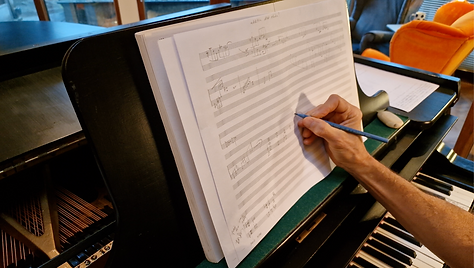
Globally acclaimed British composer Graham Fitkin begins the Treeline composition process with the first field recordings in Băneasa Forest. Using highly sensitive microphones capable of capturing subtle canopy movements, bark resonance, and the ambient textures surrounding the oak, Graham gathers the sonic material that will form the foundation of the project’s musical works. These early recordings mark the moment when the tree’s physical presence begins to shape the artistic language of Treeline.
April - May 2026
Creative Cycles and the First Treeline Concert
In April, the photography and artwork cycles begin, inviting artists and visitors to reinterpret the oak through new creative perspectives. On May 17th, 2026, the Băneasa Oak’s data and story contribute to Fitkin's Treeline Bucharest concert, where music, ecology, and technology converge in a public performance celebrating the living rhythms of the forest. This marks the beginning of the tree’s active public life as a creative and ecological ambassador.
Did you know that this tree will have its own social media channels?!
Coming soon: chat with the tree


